
Why your medication list matters for safe care
A medication list for a doctor is a complete, written record of every drug, supplement, and health product you take, and it is one of the most practical safety tools you can carry. When a new provider sees you for the first time, or when you land in an emergency room at 2 AM, that list is often the fastest way to prevent a dangerous mistake.
Medication reconciliation is the clinical process doctors use to confirm that what you are actually taking matches what has been prescribed, catching duplicate therapies and harmful interactions before they cause harm. Without an accurate list, that process breaks down. A cardiologist prescribing a blood thinner, for example, may not know your primary care doctor already started one last month.
The FDA recommends that a complete list covers prescription drugs, over-the-counter medications, vitamins, supplements, herbal products, and substances like alcohol or cannabis, because interactions among all of these can affect treatment safety. The list should also capture your allergies, your medical conditions, and emergency contact information.
Core components of a complete medication list:
- Every prescription drug, including brand and generic names
- Over-the-counter medications such as aspirin, antacids, and cold remedies
- Vitamins, minerals, and dietary supplements
- Herbal products and alternative remedies
- Recreational substances that may interact with medications
- Known allergies and the specific reactions they caused
- Medical conditions and emergency contact details
How to create a medication list for your doctor
Start by gathering everything you take, not just the bottles in your medicine cabinet. Check your nightstand, gym bag, car, and purse. People routinely forget eye drops, skin patches, inhalers, and the melatonin they take every night, but AHRQ guidelines are clear that non-oral medications like patches, inhalers, eye and ear drops, creams, injections, and as-needed drugs all belong on the list.
For each medication, record the following details:
- Brand and generic name (for example, Tylenol and acetaminophen)
- Strength (such as 500 mg or 10 mg)
- Dose and frequency (two tablets twice daily)
- Route (oral, topical, inhaled, injected)
- Purpose (what condition or symptom it treats)
- Special instructions (take with food, remain upright for 30 minutes)
- Prescribing provider, if applicable
The FDA specifies that clinicians need brand and generic names, exact strength, dosage instructions, the purpose of the medication, and administration notes to make safe prescribing decisions.
Your allergy section deserves its own space. Link each allergen to the specific reaction it caused, for example, "penicillin: hives and throat swelling." That distinction lets doctors tell the difference between a life-threatening allergy and a manageable side effect, which changes what they can safely prescribe.

To verify accuracy, cross-reference your list against your pharmacy's medication profile. The Best Possible Medication History (BPMH) standard used in clinical settings calls for confirming medication details from at least two independent sources, such as the patient, pharmacy records, and medical charts, to catch discrepancies before they cause harm. You can apply the same logic at home by comparing your list against your prescription bottles and your pharmacy's printed records.
Pro Tip: Ask your pharmacist to print a complete medication profile at your next pickup. It often catches drugs you forgot to list, including refills you have not picked up in months.
When and how to keep your medication history current
An outdated list can be just as dangerous as no list at all. Update your medication history for a doctor the moment anything changes, not at your next appointment.
Update your list immediately when you:
- Start a new prescription or over-the-counter drug
- Stop taking a medication, for any reason
- Change a dose or frequency
- Switch from a brand-name drug to a generic, or vice versa
- Experience a new side effect or allergic reaction
- Add a new supplement or herbal product
Document the reason for each change when you can. If you stopped a statin because of muscle pain, write that down. If you switched blood pressure medications because of cost, note it. Clinicians use that context to avoid repeating the same mistake.
Bring your updated list to every healthcare encounter, including pharmacy visits, specialist appointments, dental checkups, and emergency room trips. The CDC's MyMedications List resource specifically recommends reviewing your list with any healthcare provider, including pharmacists and nurse practitioners, not just your primary care doctor.

One thing most people avoid but should not: be honest about missed doses. Research shows that clinicians rely on adherence information to distinguish between a medication that is not working and one that is simply not being taken. Telling your doctor you skipped doses half the time is not embarrassing. It is the data they need to make the right call.
Where to keep your list and who needs a copy
Accessibility is the whole point. A medication list sitting in a desk drawer at home does nothing when you are in an urgent care clinic across town.
Storage and sharing best practices:
- Keep a physical copy in your wallet alongside your insurance card
- Store a second copy in your home medical file or on the refrigerator
- Take a photo of the current list and save it to your phone's camera roll
- Share a copy with a trusted family member, caregiver, or close friend
- Give copies to your primary care doctor, all specialists, and your pharmacist
- Bring the list to every appointment, including dentist and eye doctor visits
- Update and reprint the physical copy every time the list changes
The FDA advises sharing your list with anyone who might accompany you to appointments or speak on your behalf in an emergency. That includes adult children, spouses, and professional caregivers.
When sharing electronically, use platforms that offer password protection or encrypted sharing rather than plain email attachments. A PDF sent through a secure patient portal is safer than a photo texted to a provider's personal phone. For caregivers managing a loved one's care across multiple providers, a centralized digital record that all authorized parties can access eliminates the version-control problem of paper copies.
Digital tools that make medication tracking easier for caregivers
Paper lists work, but they have real limits. They get lost, go out of date, and cannot be searched when a doctor asks "when did she start that medication?" Caregivers managing a child with a chronic condition or an elderly parent with dementia face a particularly heavy documentation burden, and digital tools built for that context change the experience entirely.
Features that matter most in a digital medication tracking tool:
- Voice input so caregivers can log updates hands-free during busy moments
- Chronological timeline view to show when medications started, changed, or stopped
- Searchable records to answer provider questions quickly and accurately
- Multi-user access so family members and professional caregivers all stay current
- Secure sharing via exportable PDF or a protected link for doctors and specialists
- Medication and symptom tracking in one place to connect patterns over time
Mycarechronicle is built specifically for this use case. The app converts voice notes into a searchable, chronological medical timeline, so a caregiver can speak a medication update after a doctor's visit and have it organized automatically. When a specialist asks for a complete medication history, the caregiver can share a clean, exportable PDF rather than flipping through handwritten notes or scrolling through text messages.
The FDA notes that digital tools enabling chronological tracking, quick edits, and instant sharing reduce caregiver stress and improve accuracy, particularly in complex cases where multiple providers are involved. For families coordinating care across a pediatric neurologist, a cardiologist, and a school nurse, a shared digital record is not a convenience. It is a coordination system.
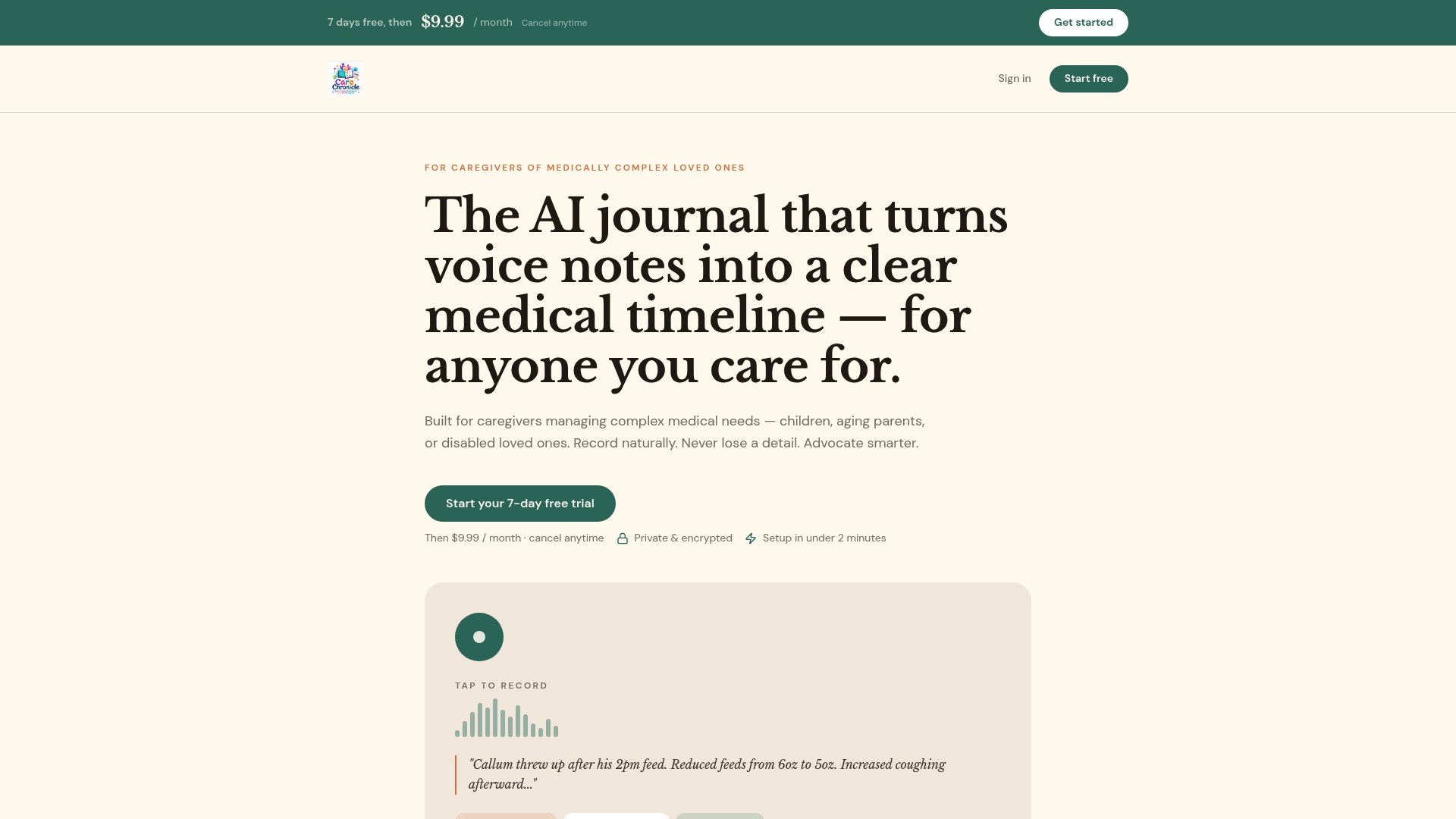
Mycarechronicle offers a 7-day free trial, giving caregivers time to build out a full medication timeline before committing. The app's guided medication tracking feature walks you through every field a clinician needs, so nothing gets left out.
Key Takeaways
A complete, current medication list shared with every provider is one of the most direct ways to prevent medication errors and support safe, coordinated care.
| Point | Details |
|---|---|
| Include everything you take | List prescriptions, OTC drugs, vitamins, supplements, herbal products, and relevant substances like alcohol or cannabis. |
| Record full clinical details | Note brand and generic names, strength, dose, frequency, route, purpose, and any special instructions for each medication. |
| Document allergies with reactions | Link each allergen to the specific symptom it caused to help providers distinguish serious allergies from manageable side effects. |
| Update immediately after any change | Revise the list the moment you start, stop, or adjust a medication, and bring the current version to every healthcare visit. |
| Use digital tools for complex care | Voice-first apps like Mycarechronicle create searchable timelines and shareable PDFs that reduce errors across multiple providers. |