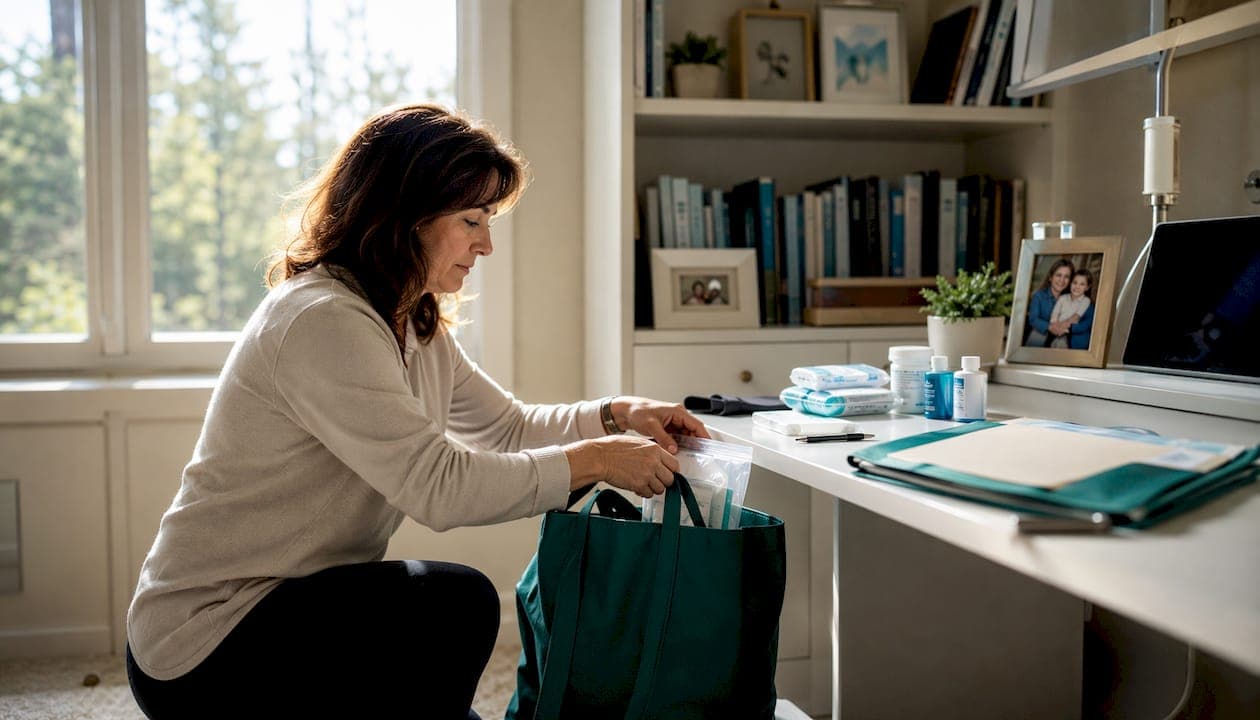
Your hospital go bag checklist needs five things right now: a waterproof folder with ID, insurance card, and a printed medication list; a 24–48 hour supply of current medications in original bottles; your phone plus a 6–10 ft charging cable and a power bank; a small hygiene kit (wet wipes, toothbrush, non-skid socks); and a caregiver bag with snacks, cash, and a contact list. These five groups matter at arrival because they speed registration, prevent medication errors, and keep you reachable when the team needs a decision fast. Print this page and tape it to the bag as your one-page reference.
Table of Contents
- What goes in a complete hospital go bag checklist?
- How do you organize the bag for fast access?
- What extra items do medically complex patients need?
- How should you bring and document medications safely?
- What should you hand over at admission and ask at discharge?
- Where should you keep the bag, and when should you update it?
- Key Takeaways
- Why a smaller bag makes you a better advocate
- Care Chronicle keeps your med list ready when it matters most
- Useful sources and templates
What goes in a complete hospital go bag checklist?
Pack by category so nothing gets left behind under pressure.
Documents (store in a labeled waterproof folder)
A labeled, waterproof folder is the single most important organizational tool you own. Inside it, keep:
- Government-issued photo ID and insurance card(s)
- Printed medication list with dosages, schedules, and reasons
- Allergy list (drug allergies on top, in bold)
- Advance directive and power of attorney copies
- Recent discharge summaries or imaging reports if available
- Preferred pharmacy name and phone number
- Contact list: primary care doctor, specialists, and two family backup contacts
Medications and medical supplies
Bring original prescription bottles when possible, or a clearly labeled supply for 24–48 hours. For medically complex patients, also pack:
- Emergency inhaler, insulin, or other time-sensitive meds
- Ostomy supplies and spare pouches
- Enteral or feeding pump tubing and a backup battery
- CPAP mask, hose, and a copy of the prescription
- Extra batteries for any device that uses them
Electronics and charging
Hospital outlets are often behind the bed or shared. A portable power bank and a long cable solve this before it becomes a problem. Pack:
- Phone and extra-long charging cable (6–10 ft)
- Power bank, fully charged before you leave
- Earbuds for quiet during long waits
- Small notebook and pen, or a preprinted medication card
Hygiene and independence items
Wet wipes are the most underrated item on any hospital stay packing list. They handle quick cleansing when mobility is limited, and they take up almost no space. Add:
- Travel-size toothbrush and toothpaste
- Non-scented lotion and lip balm
- Non-skid socks (two pairs)
- Small bar soap or face cloth
- Hand sanitizer in a leak-proof bag
Comfort and clothing
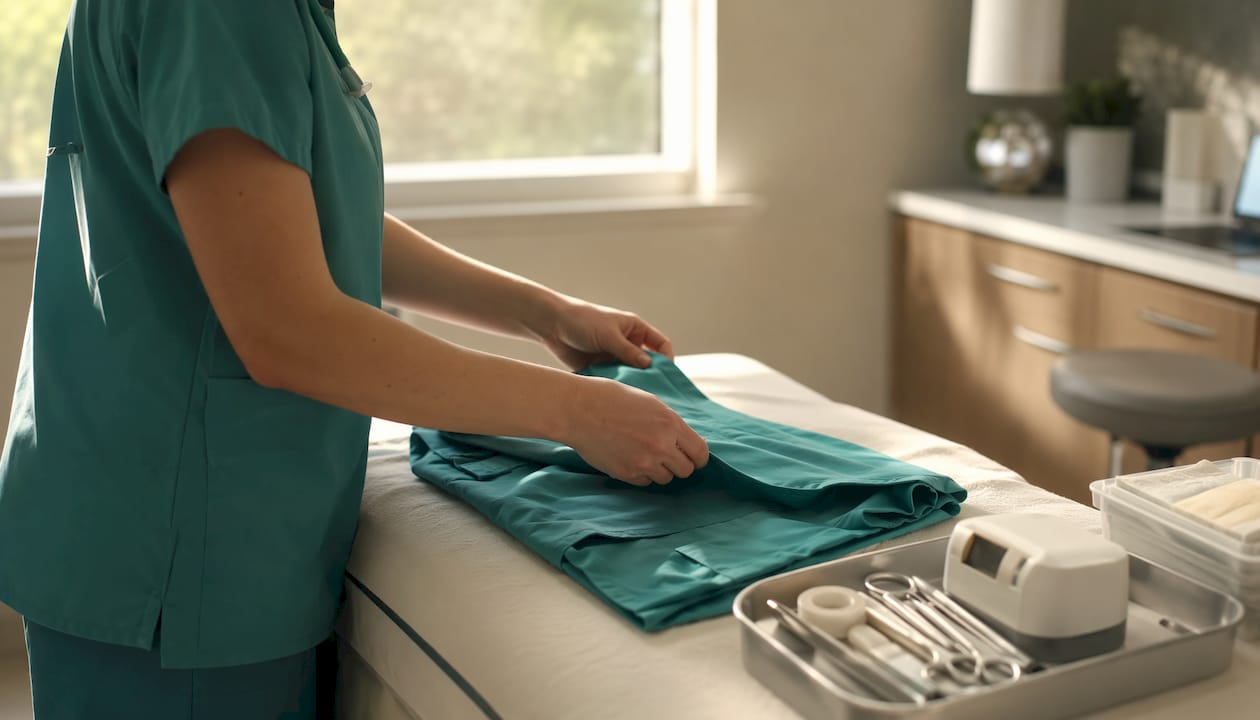
Choose clothing for clinical access, not comfort alone. Short sleeves allow IV placement without undressing; a front-opening top or one worn back-to-front works when a cannula is in place. Pack one change of clothes, a lightweight blanket or shawl, and one small personal item. A familiar photo or a short handwritten note helps patients stay emotionally grounded in a clinical environment.
Caregiver bag items
Caregivers need their own bag to stay alert and effective through long stays. Keep it separate and small:
- Protein bars, nuts, or other non-perishable snacks
- Personal medications (acetaminophen, antihistamine) for yourself, not the patient
- Cash or a payment card for vending machines or the cafeteria
- House and car keys
- Printed list of who needs to be notified and who has home caregiving backup
Comparison: patient go bag vs. caregiver go bag
| Category | Patient bag | Caregiver bag |
|---|---|---|
| Meds and supplies | Patient meds, devices, spare parts | Caregiver's own OTC meds |
| Documentation | ID, insurance, med list, directives | Contact list, notification list |
| Comfort items | Photo, blanket, non-skid socks | Snacks, personal toiletries |
| Electronics | Phone, long cable, power bank | Phone, charger, earbuds |
Pro Tip: If your loved one needs many supplies, pack two layers: an "emergency" inner bag with absolute essentials and a larger "overnight" outer section. Visitors can bring extras during visiting hours so the go-bag stays light.
How do you organize the bag for fast access?
One visible waterproof folder handles all clinical documents; a small flat box (think the size of a tissue box) corrals loose small items and prevents the bedside locker from becoming a pile.
Label everything with a standard template: patient name, date of last medication update, and primary drug allergy. Consistent labeling means a nurse picking up the folder at 2 AM can find what she needs in seconds.
Medication list format (one line per drug):
Med name | Dose | Route | Schedule | Last given | Prescriber | Reason
Example: Metformin | 500 mg | Oral | Twice daily with meals | 7:00 AM today | Dr. Patel | Type 2 diabetes
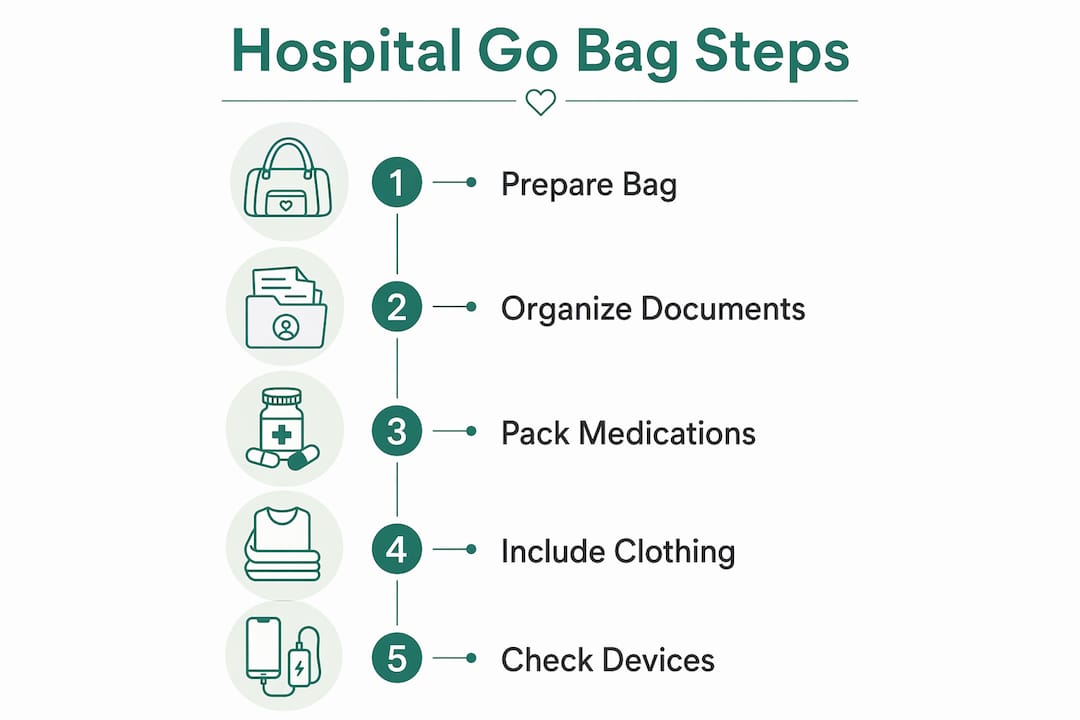
Pack the bag in layers: documents in the top pocket, phone and charger in the front pocket, medications and supplies in the main compartment, and small items (glasses, pens, earbuds) in the flat box.
Pro Tip: Create a single "admit" folder with a clear front sleeve. Slide a printed med list into the sleeve and tuck two photocopies inside: one for registration, one to hand directly to the bedside nurse.
What extra items do medically complex patients need?
Start with the devices your loved one cannot safely go without, then build outward.
- CPAP: mask, hose, power adapter, and a copy of the prescription
- Feeding pump: tubing, backup battery, and a one-page setup note
- Oxygen equipment: interface type, flow rate, and supplier contact
- Ostomy: at least two spare pouches, barrier wipes, and adhesive remover
- Hearing aids and spare batteries; glasses and case
- Communication board or printed phrase cards for nonverbal patients
- Written swallowing or positioning instructions for staff
Before you leave home, confirm device battery levels, check whether the hospital allows family-supplied equipment, and label every removable part with the patient's name.
Pro Tip: Pack a small clear zip bag for each device, pre-labeled with the patient's name and a one-line note explaining normal use. Clinical staff can read it in under 30 seconds and know exactly what they are handling.
How should you bring and document medications safely?
Bring a printed medication list and a clearly labeled short supply or original bottles, and declare everything at triage. Do not wait to be asked.
At intake, hand over the med list, present prescription bottles if staff request them, read aloud the two or three most critical medications and the time each was last given, and confirm the hospital will reconcile the list. Hospital policy commonly requires staff to control administration for safety and legal reasons, so ask who will manage each medication and write down the staff member's name, date, and time.
Photograph original medication labels and store the images in Mycarechronicle or your phone's camera roll. Print copies for the waterproof folder. When a pharmacist or nurse needs to verify a dose at midnight, a clear photo beats a handwritten note every time.
Pro Tip: Use Mycarechronicle's voice-to-text feature to update the medication list after every clinical change. Export a PDF, print it, and swap the old copy in your waterproof folder before the next visit.
What should you hand over at admission and ask at discharge?
At admission, bring and be ready to hand over: photo ID, insurance card, printed medication list, advance directive, contact list, and preferred pharmacy. Have two copies of the medication list ready to give away.
Ask the admitting team: Who is the attending physician? What tests are planned today? What are the visiting and phone call policies?
At discharge, request these in writing before you leave:
- Full medication list including any new hospital prescriptions
- Wound care or device care instructions, step by step
- Scheduled follow-up appointments with dates and contact numbers
- Name and direct number of the discharging clinician
- Printed discharge summary or care plan
Also confirm: transport arrangements are in place, home-care referrals have been submitted, durable medical equipment orders are processed, and all new prescriptions are filled or called in. For a smooth transition home, reviewing post-discharge care planning before the day of discharge reduces last-minute scrambling.
Where should you keep the bag, and when should you update it?
Store the bag in a visible, secure spot near your usual exit, not in a closet. Review and refresh contents at least every six months and after any medication or care change.
Maintenance checklist:
- Set a calendar reminder every January and July
- Charge the power bank and check battery levels on all devices
- Check expiration dates on wipes, snacks, and any consumables
- Reprint the medication list after every clinical visit that changes a drug
What not to pack: large amounts of cash, jewelry or valuables, full medication refills, more than one change of clothes, or bulky electronics like laptops.
Pro Tip: Tape a "swap list" to the outside of the bag listing items visitors can bring during visiting hours, such as extra toiletries, additional clothing, and comfort food. The go-bag stays compact; visitors fill the gaps.
Key Takeaways
A well-organized, pared-down hospital go bag with a printed medication list, waterproof documents, and a charged power bank gives caregivers the fastest path to safe admission and clear communication with clinical staff.
| Point | Details |
|---|---|
| Grab these first | Documents, printed med list, 24–48 hr medication supply, phone, long charger, and power bank. |
| Show staff immediately | Present the medication list at triage and declare all personal medications before being asked. |
| Document medications clearly | Use the one-line format: med name, dose, route, schedule, last given, prescriber, and reason. |
| Store and refresh the bag | Keep it near the exit; review every six months and after any clinical change. |
| Best single organizational step | Waterproof folder with a printed med list plus a phone photo of every original label. |
| Mycarechronicle | Use Care Chronicle to record voice-note med updates and export a current PDF for the waterproof folder before each visit. |
Why a smaller bag makes you a better advocate
The conventional wisdom is to pack for every scenario. After watching caregivers navigate real admissions, the opposite is true. A bloated bag creates lost items, wasted time at the bedside, and a caregiver who is managing luggage instead of managing care.
A pared-down bag forces you to know exactly what is in it. When a nurse asks what your loved one took this morning and at what dose, you reach for the folder, not a pile of papers. When registration needs the insurance card, it is in the clear front sleeve, not buried. Mayo Clinic's packing guidance and AdventHealth's emergency room recommendations both point the same direction: bring what staff need from you, not everything you might need for yourself.
The other piece most guides skip: keeping the bag current is the real work. A medication list that is three months old is worse than no list, because it creates false confidence. Integrating Mycarechronicle's voice-note timeline into your routine means the list is updated after every appointment, not the night before an emergency.
Care Chronicle keeps your med list ready when it matters most
When a loved one is admitted unexpectedly, the hardest part is often producing an accurate, current medication list under pressure. Mycarechronicle solves that specific problem. Speak a quick voice note after each appointment, and the app builds a searchable, chronological medical timeline automatically.
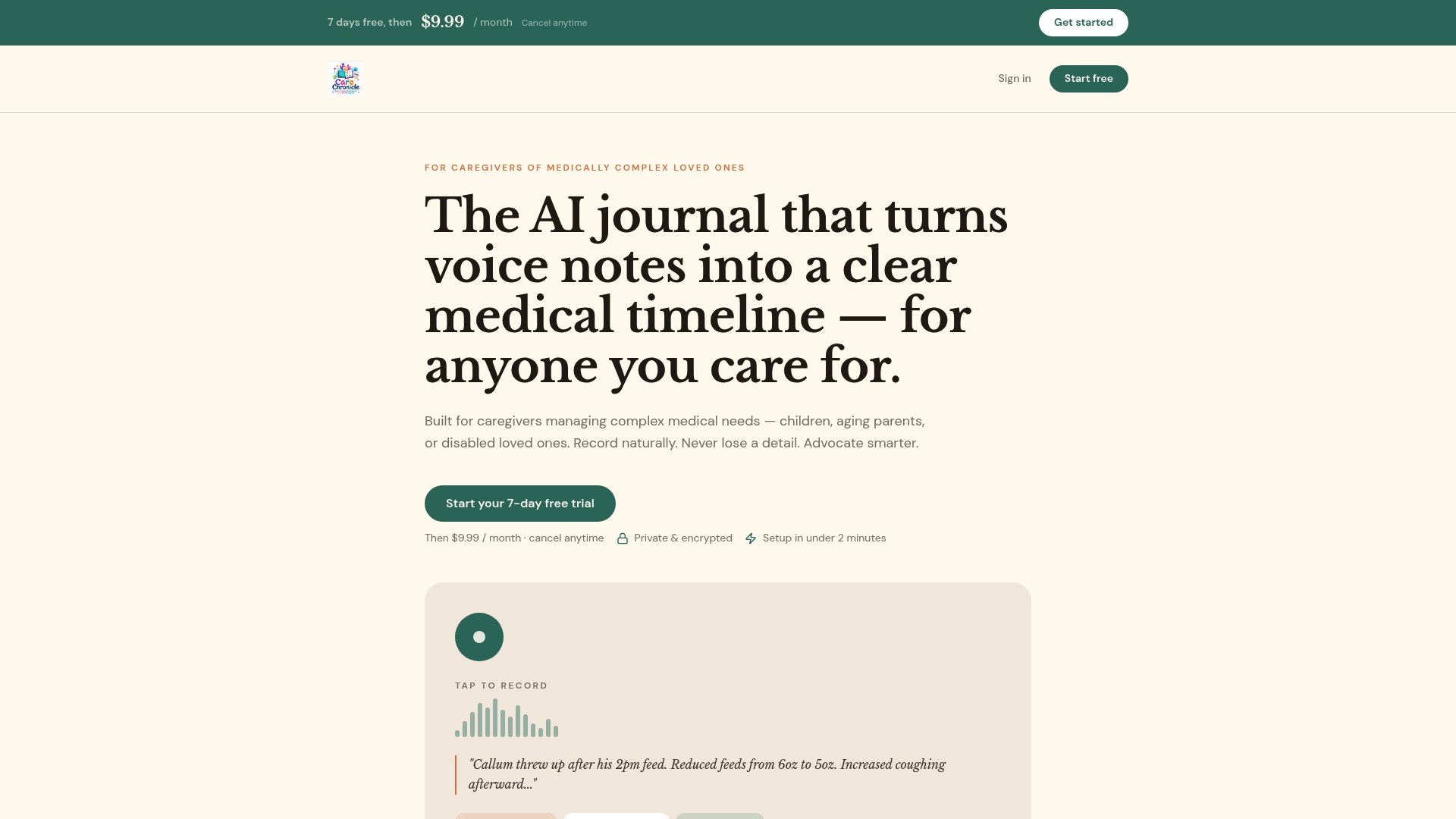
For the go-bag, export a PDF of the current medication list directly from the app, print it, and slide it into the waterproof folder. Multiple caregivers can contribute to a single shared timeline, so the list reflects every interaction, not just yours. The 7-day free trial gives you enough time to build a complete medication record before your next planned visit or unplanned trip to the ER. Start the free trial at Mycarechronicle and have a current, exportable med list ready before you need it.
Useful sources and templates
The sources below offer printable checklists, medication list templates, and hospital packing guidance for US caregivers.
| Source | What it provides |
|---|---|
| Mayo Clinic packing checklist | General hospital packing guidance and medication list recommendations |
| AdventHealth go-bag guide | ER-specific go-bag advice including medication declaration rules |
| HealthInstant go-bag guide | Waterproof folder guidance and six-month review schedule |
| Carer Mentor hospital checklists | Dual patient/caregiver bag approach and small-item containment tips |
| Helping Hands home preparation guide | Home safety and caregiver-readiness steps for pre- and post-admission planning |
Templates to create or export before your next admission:
- Medication list (one-line format: name, dose, route, schedule, last given, prescriber, reason)
- Admission folder cover sheet (patient name, date of birth, primary allergy, emergency contact)
- Device parts list (device name, serial number, spare parts packed, one-line use note)