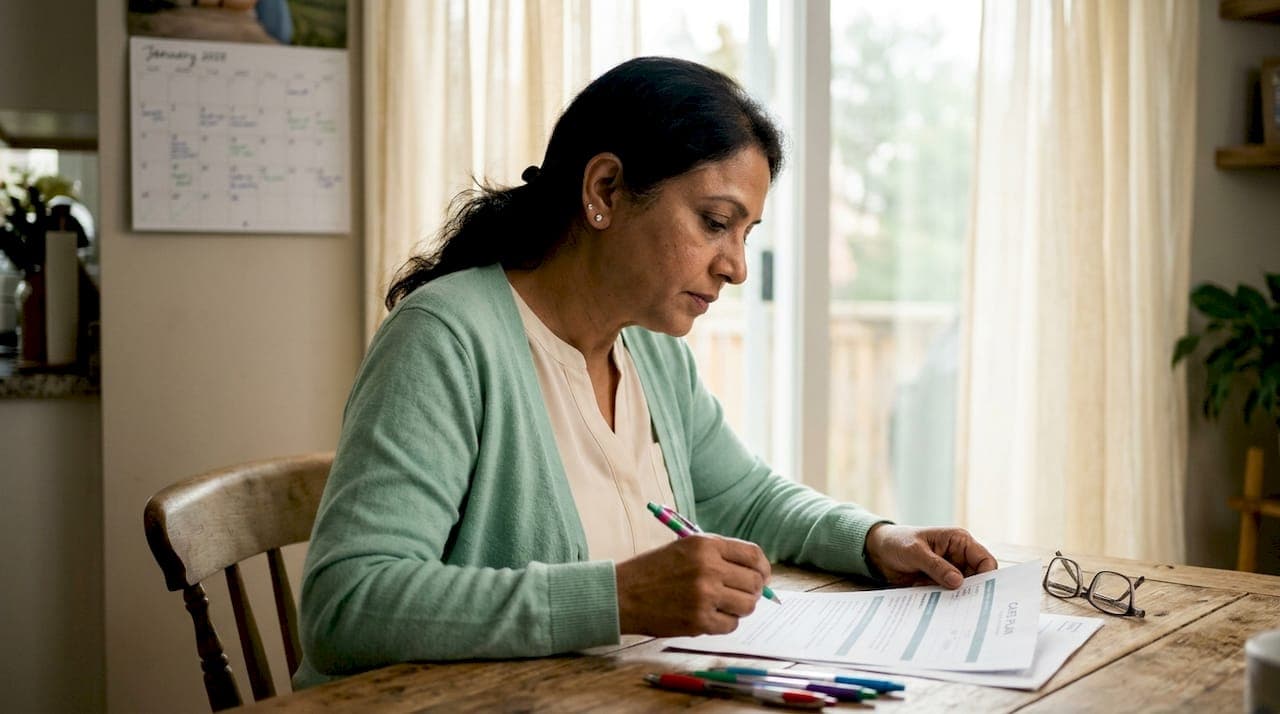
What a caregiver care plan template actually includes
A care plan template for caregivers is a structured document that captures everything a care team needs to support someone with complex health needs, from daily routines to emergency contacts to medication schedules. The CDC recommends reviewing and updating this document at least annually, or sooner whenever a health status change occurs. Think of it as the single source of truth for anyone stepping in to help, whether that's a home health aide covering a weekend shift or a specialist seeing the person for the first time.
A solid caregiver care plan document covers these core components:
- Personal information: Full name, date of birth, address, and phone number
- Medical conditions: Current diagnoses, allergies, and relevant history
- Medications: Drug name, dosage, timing, and special instructions (refrigeration, take with food, etc.)
- Healthcare providers: Names and contact information for every doctor and specialist
- Health insurance: Provider name, policy number, and contact line
- Emergency contacts: Names, relationships, and phone numbers
- Daily routines: Wake time, meals, hygiene, mobility assistance, and preferred activities
- Personal preferences: Communication style, dietary needs, likes and dislikes
- Goals: Short-term and long-term care objectives
- Advanced care planning: Medical power of attorney, living will status, and end-of-life preferences
No two people have identical needs, so the template is a starting point, not a finished product. Texas Health and Human Services frames person-centered planning around the individual's own definition of quality of life, which means the plan should reflect what matters to the person receiving care, not just what's medically convenient.
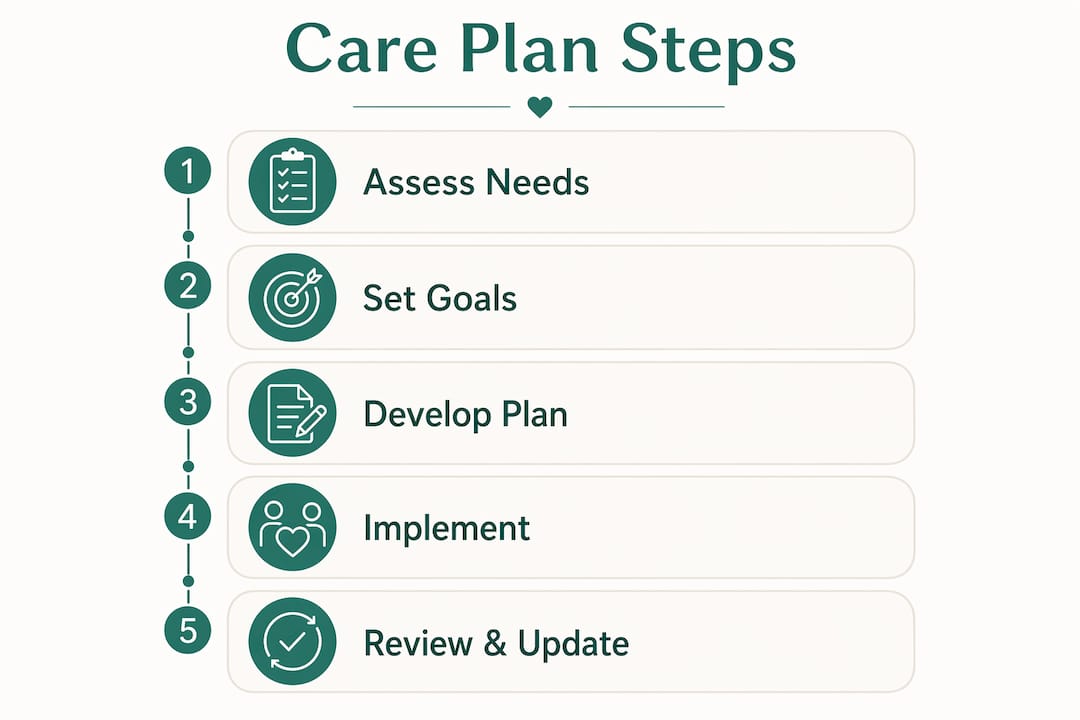
How to create and maintain an effective care plan
Building a caregiver care plan from scratch feels less daunting when you break it into clear steps. The HealthWell Foundation outlines four phases: preparation, pre-planning, action planning, and monitoring. Here's how that plays out in practice:
- Assess all needs. Start by evaluating the person's physical, emotional, and cognitive situation. Talk to their doctors, review recent discharge summaries, and note any functional limitations.
- Gather the care team. Collaboration is a core requirement, not a nice extra. Include the care recipient (when possible), family members, healthcare providers, and any legal representatives.
- Set SMART goals. According to nurse.org, effective care goals are Specific, Measurable, Achievable, Relevant, and Time-bound. "Walk to the mailbox three times a week by the end of the month" beats "improve mobility."
- Document routines and interventions. Write out the daily schedule, medication administration steps, and any condition-specific protocols in plain language.
- Assign responsibilities. Specify who does what and when, so nothing falls through the cracks when caregivers rotate.
- Review and revise regularly. A new diagnosis, a hospitalization, or a medication change all trigger an immediate update. Scheduled reviews keep the plan accurate between those events.
Pro Tip: Bring the care recipient into every plan review meeting, even briefly. Their feedback on what's working and what isn't will catch gaps that no assessment form will.

Practical tips for building a plan that actually gets used
The real value of a caregiving plan template lies in how well it fits the specific person and situation. A generic form left in a drawer helps no one.
- Write in plain language. Avoid clinical shorthand. Anyone picking up the plan mid-emergency should understand it immediately.
- Display it prominently. The CDC's Complete Care Plan form explicitly instructs caregivers to post the daily care plan where all caregivers can see it. A visible plan cuts confusion and speeds up emergency response.
- Customize for the condition. A plan for someone with dementia needs behavioral triggers and redirection strategies. A plan for a child with a chronic illness needs school accommodation notes and pediatric specialist contacts.
- Use a calendar alongside the plan. Appointments, medication refill dates, and follow-up calls belong on a shared calendar that every caregiver can access.
- Update after every significant change. Hospitalizations, new prescriptions, and shifts in cognitive status all require a plan revision, not a sticky note.
- Leverage voice-based tools for real-time notes. When you're mid-caregiving and can't type, speaking an observation into a voice journal keeps the record current without interrupting care.
Why a structured care plan benefits everyone involved
A well-built plan does more than organize paperwork. Structured care planning builds confidence across the entire care team and creates consistency that the care recipient can feel.
- Consistent care delivery: Every caregiver follows the same protocols, so the person receiving care gets the same quality of support regardless of who's on duty.
- Reduced caregiver stress: Knowing exactly what to do and when removes the daily guesswork that wears caregivers down over time.
- Better communication: A shared document replaces fragmented texts and verbal handoffs, giving the whole team a single reference point.
- Improved safety: Medication details, allergy alerts, and emergency contacts are all in one place, reducing the risk of dangerous errors.
- Proactive health management: Documented baselines make it easier to spot changes in condition early, before a small shift becomes a crisis.
Taking care of yourself while managing a care plan
Caregiver health tends to erode quietly. The TENA US caregiver resource notes that organized planning directly reduces caregiver burden by creating predictability in an otherwise unpredictable role. That predictability is protective.
- Recognize burnout early. Persistent exhaustion, irritability, and feeling detached from the person you care for are warning signs, not personal failures.
- Set boundaries around your time. Block personal time on the same calendar you use for care tasks. If it's not scheduled, it won't happen.
- Build a support network. Local caregiver support groups, social workers, and respite care programs exist specifically to share the load.
- Let the plan carry some of the cognitive weight. A thorough care plan document means you don't have to hold every detail in your head. That mental offload matters more than it sounds.
- Ask for help before you hit empty. Waiting until you're overwhelmed to reach out to family or professional support makes recovery harder and care quality suffers in the meantime.
Resources and tools to support your caregiving plan
Good resources make the difference between a care plan that gets updated and one that collects dust.
- CDC caregiving guidelines: The CDC's caregiving guidelines page offers a free downloadable care plan PDF and step-by-step guidance grounded in public health standards.
- Mycarechronicle: For caregivers managing medically complex situations, Mycarechronicle converts voice notes into a searchable, chronological medical timeline. It supports medication and symptom tracking, lets multiple caregivers contribute, and generates shareable PDFs, which makes it a practical complement to any written care plan.
- Local Area Agencies on Aging: These federally funded agencies connect caregivers with community support, respite care, and care coordination services across the United States.
- AARP Caregiver Resource Center: Offers guides, legal planning tools, and a helpline for family caregivers navigating complex care situations.
- Legal and privacy planning: Every care plan should reference whether a Medical Power of Attorney and a Living Will are in place. These documents determine who makes decisions when the care recipient cannot, and they belong in the plan alongside the medical information.
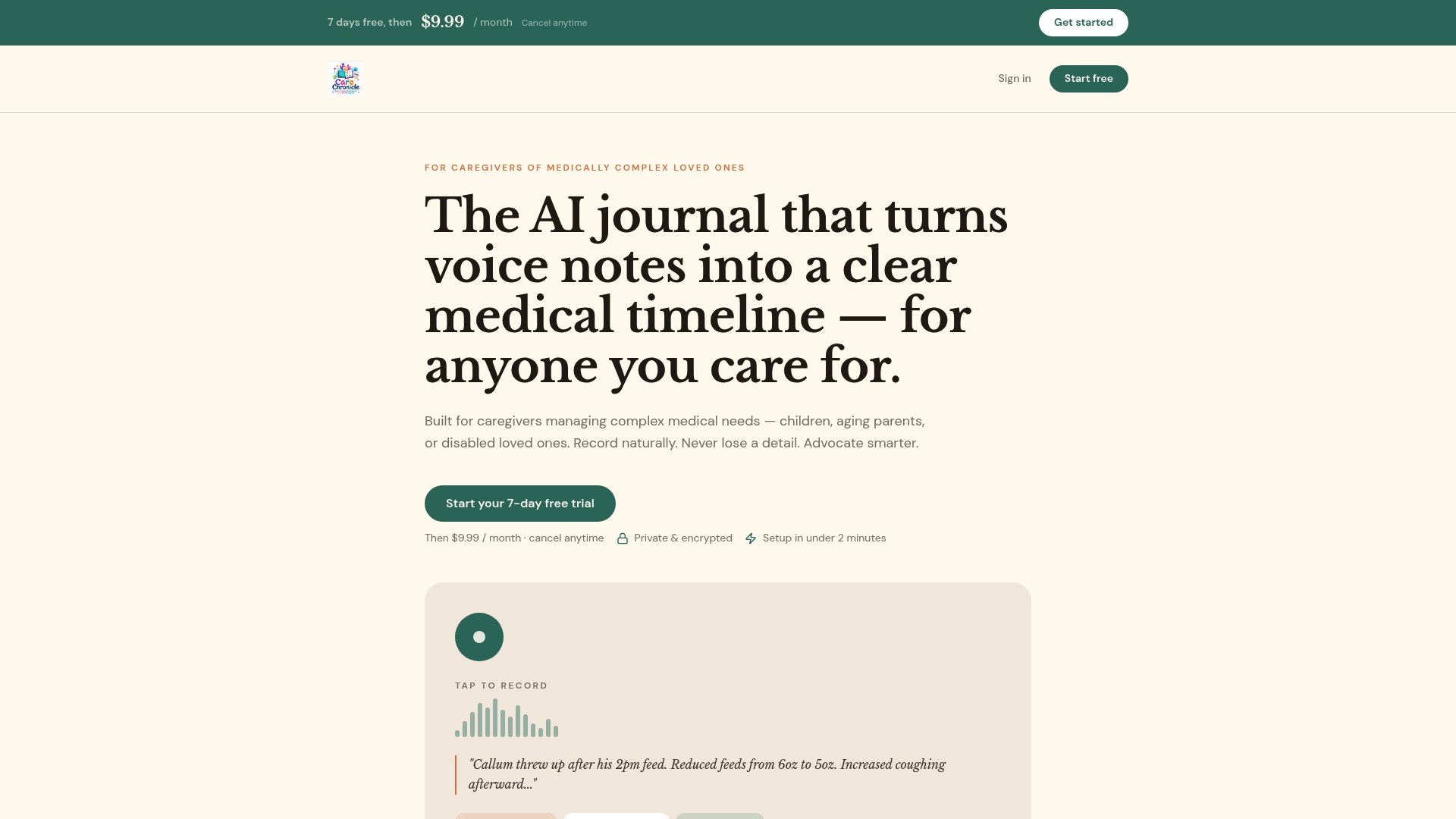
Mycarechronicle's 7-day free trial gives you a low-risk way to test whether a voice-first medical journal fits your caregiving workflow before committing to a subscription.

Key Takeaways
A care plan template for caregivers works best when it is customized, displayed prominently, updated after every health change, and built collaboratively with the full care team.
| Point | Details |
|---|---|
| Core components | Include personal info, medical conditions, medications, provider contacts, emergency contacts, and daily routines. |
| Update triggers | Revise the plan after any new diagnosis, hospitalization, or medication change, and at minimum annually. |
| Collaboration matters | Involve the care recipient, family, healthcare providers, and legal representatives in every plan review. |
| Visibility saves time | Post the daily care plan where all caregivers can see it to reduce confusion and speed emergency response. |
| Caregiver wellbeing | Organized planning reduces cognitive burden and creates the predictability that protects caregiver health. |